Alberta · The data-centre buildout

Regular people.
Real questions.
Cited answers.

Independent, non-technical citizens looking for the truth about data-centre development. Every number sourced.

Independent and unfunded. No money from the data centres, the developers, or any government. We’re just trying to find out what’s true.

About this project →

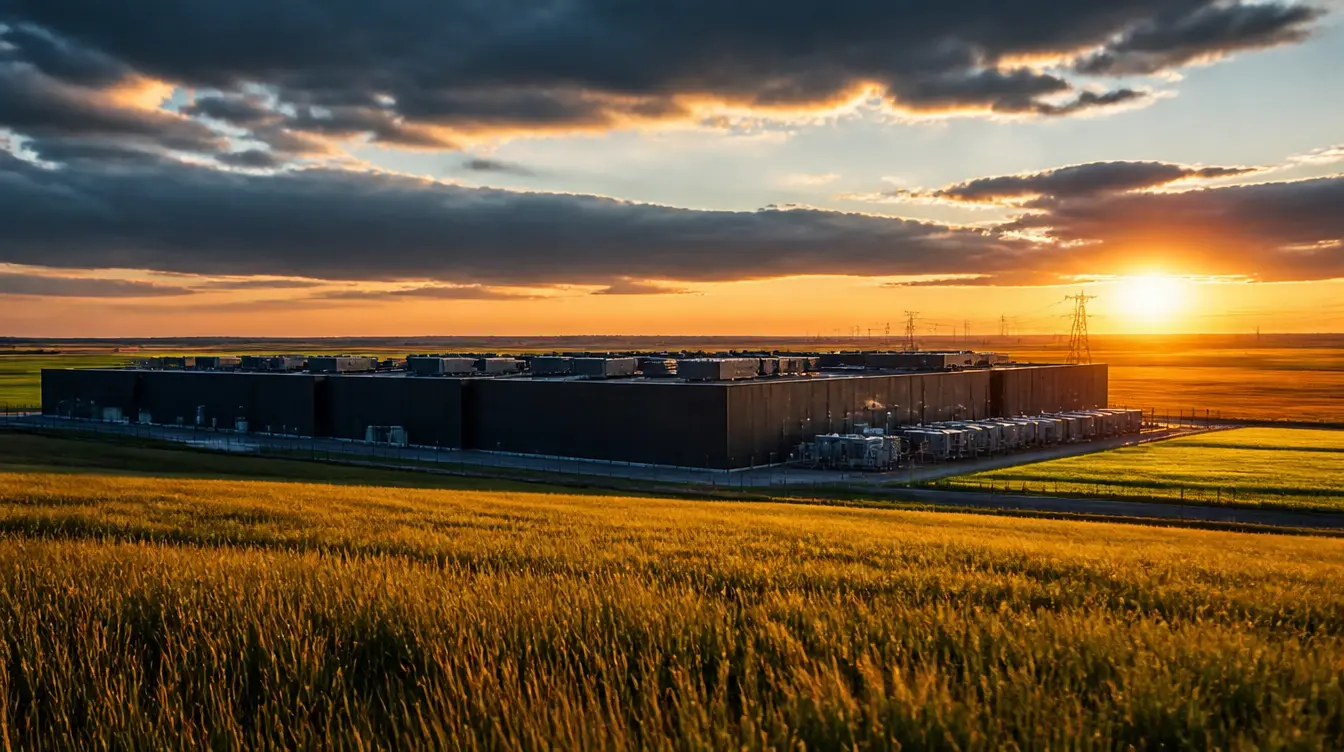
Illustration: a data centre on the Alberta prairie. Not a photograph of a specific site.

The technology is global.
The impact is local.

Data centres power AI and promise investment and jobs. They also need land, electricity and water. What does that mean for your community , and who pays? Here are the nine arguments, each side stated plainly, every claim cited.

The Grid

Can the grid handle it, and will my power bill rise?

For Projects can build their own power and fund grid upgrades, leaving Alberta lasting capacity.

Against The grid can connect ~1,200 MW through 2028 against 16–21 GW requested; costs can land on ratepayers.

Dig in →

Water Use

Will a data centre drain our water?

For Closed-loop and dry cooling can cut water use up to 95%; Meta's Sturgeon campus claims no operational cooling water.

Against Tower-cooled sites can use ~1.9M litres/day; 'closed-loop' is a choice, not a guarantee, and licences can be contested.

Dig in →

Noise

researching

Will it be loud next to homes and land?

For Modern designs can enclose and baffle cooling gear; setbacks and berms reduce noise at the fence line.

Against Cooling fans and on-site gas plants run 24/7; some communities elsewhere report a persistent hum.

Cited page coming

Emissions

Will on-site power add pollution and carbon?

For Gas with carbon capture, geothermal, or clean grid power can cut emissions where it's available.

Against The Alberta Utilities Commission rejected the gas plant behind the Olds project, twice; capture is unproven at scale here.

Dig in →

Land Use

What happens to the farmland and the land around it?

For Sited on marginal or industrial land, a data centre uses a small footprint and pays significant local tax.

Against On prime farmland it's a permanent conversion; neighbours near Airdrie fought a project and won.

Dig in →

First Nations

Were First Nations consulted, and is their land and water respected?

For Done right, projects can bring revenue-sharing, jobs and equity partnerships to First Nations.

Against The Sturgeon Lake Cree Nation says Wonder Valley's water licence was granted with 'zero consultation' and has filed for judicial review.

Dig in →

Public Health Risks

researching

Are there real health risks to the community?

For A well-run, low-emission, low-noise site poses little direct health risk to neighbours.

Against On-site gas combustion means air-quality questions; noise and stress effects need independent monitoring.

Cited page coming

Economic Impact

Are the jobs and investment real, and who benefits?

For Billions in capital, thousands of construction jobs, and a lasting local tax base.

Against Meta's build peaks at 3,000+ jobs but leaves ~300 permanent; no independent benefit study exists yet.

Dig in →

Autonomy

Are we building this for us, or for someone else's agenda?

For Domestic AI infrastructure can mean sovereignty, control of our own data, and strategic advantage.

Against Much of the capital and demand is foreign; it's fair to ask who owns the compute and who carries the risk.

Dig in →

Every claim is sourced , see Citations. Noise and Public Health are marked “researching” until we can cite them properly.

Alberta in the data-centre picture

Alberta has become the epicentre of Canada's data-centre rush. Here is the honest lay of the land , why capital is looking here, what actually limits it, and where the politics stand.

Why Alberta?

A deregulated power market

Alberta's energy-only electricity market lets large buyers strike their own power deals and build their own generation , rare in Canada and attractive to hyperscalers.

Cheap, abundant natural gas

Low-cost gas on tap makes 'bring your own power' viable, so a project can run without waiting years for the public grid.

Cold air does the cooling

Alberta's climate lets facilities cool with outside air much of the year , the province pitches this as doing for free what warmer places burn power to do. 18

Land and a fast path

Comparatively cheap land and a quick connection where power already exists shorten the timeline versus crowded US markets.

A government courting it

The province has set a $100B+ investment target and is actively marketing Alberta as a data-centre destination. 5

$100B+
the province's five-year investment target
but the grid can connect
1,200 MW
of new large load through 2028 , already spoken for

Key constraints

Power is the binding limit

The grid can connect ~1,200 MW of new large load through 2028, against 16–21 GW requested , more than ten times the room. The grid operator's own CEO says the system cannot connect them all. 1

Water is scarce in the south

Most southern-Alberta river basins have been closed to new surface-water licences since 2006. A new data-centre licence would be among the most junior , cut back first in a shortage , while households are never curtailed. 18

The queue is oversubscribed

16–21 GW of requests sit against 1,200 MW of room, across roughly 29–40 projects. Being 'announced' is not the same as being connectable. 1

Political climate

The province

Actively courting the industry with a $100B+ target and a marketing push, framing data centres as an economic engine. 5

Local councils

Rocky View County rejected a 1,100-acre proposal 6–1, and a nearby county placed a moratorium on new data-centre applications after public pushback. 12

The regulator

The Alberta Utilities Commission rejected the on-site gas plant behind the Olds project , twice. 8

First Nations

The Sturgeon Lake Cree Nation says the Wonder Valley water licence was granted with 'zero consultation' and has filed for judicial review. 15

Residents

Town halls across the province have been testy, with residents pressing on water, power bills and who benefits. 11

The whole story, in one picture

Alberta can connect a sliver of what has been requested.

Where the projects are

Illustrated map of Alberta
  • Committed
  • Announced
  • Rejected

Tap a dot for the project. Locations are approximate, full list on the tracker.